
9 Ways m-learning and Virtual Reality Are Revolutionising Corporate Training
Communication, Training3 min read
M-learning and virtual reality have become the technological superheroes of corporate training. With capes of innovation and shields of interactivity, they are here to revolutionise the way companies educate and prepare their employees for the challenges of the modern professional world. In this article, we will explore nine magnificent ways in which these two powerful forces are redefining the boundaries of corporate learning.
1. Creating immersive learning environments
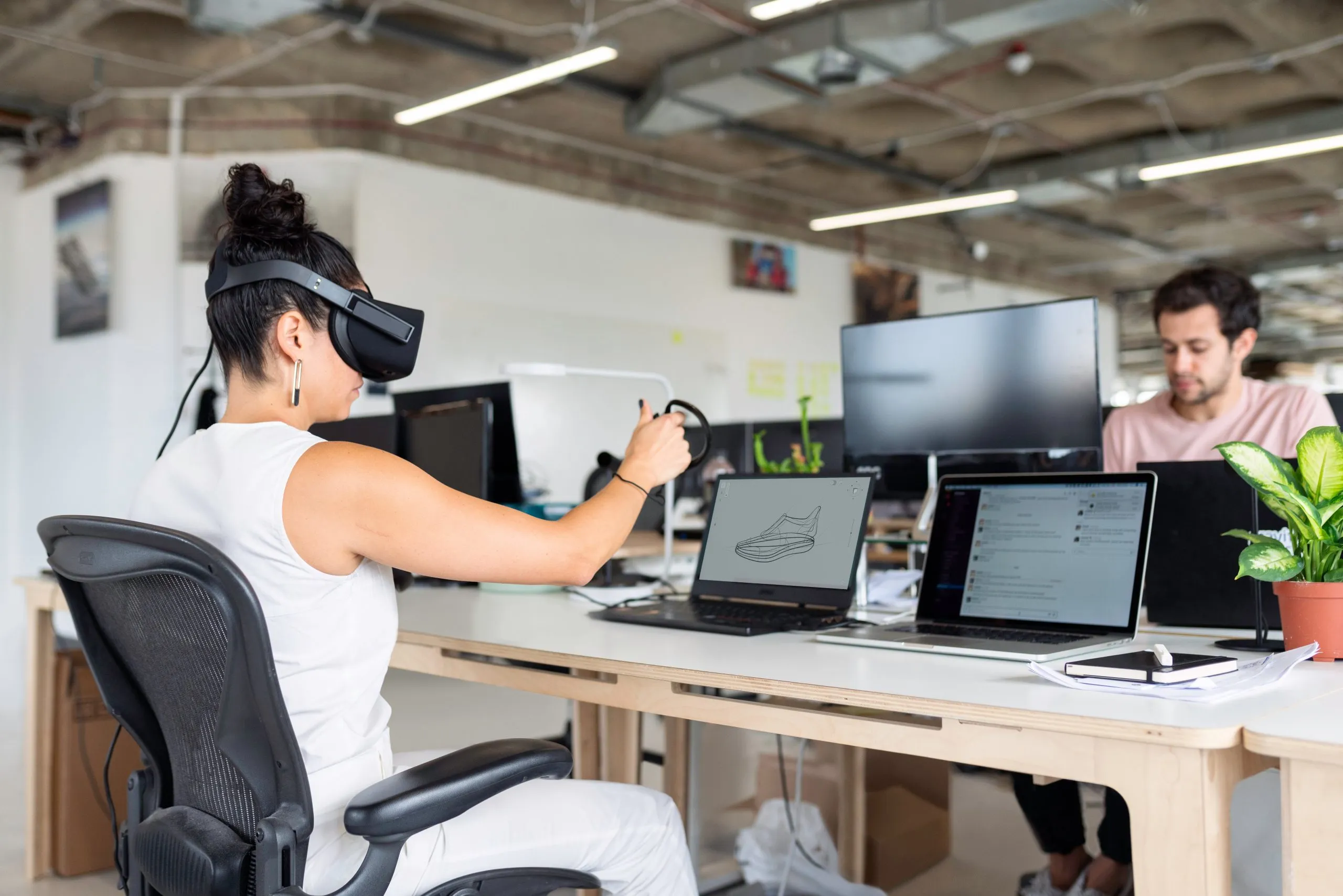
Immersive environments are the battlefield where virtual reality shines in all its splendour. They allow employees to immerse themselves in a three-dimensional world, interact with it and learn through direct experience. This not only makes learning more engaging but also improves the retention of information and acquired skills.
2. Making mobile learning (m-learning) easier
M-learning is like the faithful companion who is always by your side. It makes learning materials accessible from anywhere at any time, promoting a culture of continuous, adaptive learning. It also fits perfectly with the fast pace of today’s business world.
3. Promoting active learning
M-learning and virtual reality encourage more active participation by learners in the educational process. Employees are not mere recipients of information; instead, they interact, experiment and apply their knowledge in practical, realistic scenarios.
4. Gamification and engagement
These technologies make it possible to incorporate gamified elements into training programmes. This results in a more attractive and stimulating learning experience, which can increase employees’ motivation and participation in courses.
5. Enabling personalised learning
M-learning and virtual reality open the door to more personalised, user-centred learning. Platforms can adjust to each employee’s individual needs, pace and learning style, ensuring a richer and more effective educational experience.
6. Improving assessment and tracking
These modern technologies allow more effective assessment and tracking of learners’ progress. They can provide detailed data and in-depth analysis of employee performance, helping to identify areas for improvement and personalise training strategies even further.
7. Enabling constant content updates
The business world is constantly changing, and m-learning makes it possible to update training content quickly and effectively. In addition, virtual reality allows the creation of new scenarios and experiences that reflect updates or changes in company policies and processes.
8. Increasing collaboration and interaction
M-learning and virtual reality can work as powerful tools for increasing collaboration among employees. They facilitate communication and the exchange of ideas and knowledge, and promote a culture of collaborative learning and mutual support.
9. Broadening the horizons of training
These technologies make it possible to overcome physical barriers, providing access to global experts and to more diverse and enriching educational content. Employees can benefit from different perspectives and broaden their horizons of knowledge and skills.
Conclusion
M-learning and virtual reality are more than mere technology trends; they are powerful catalysts of transformative change in corporate training. They invite us to imagine a world where learning has no limits and is constantly evolving to meet the changing needs of companies and their employees.
The benefits are undeniable: from more immersive and personalised learning environments to a richer and more detailed assessment of employee performance. These technologies are here to stay, leading the way towards a future where corporate training is more effective, adaptable and learner-centred. Dive into this exciting journey and discover how m-learning and virtual reality can take your corporate training strategy to new heights of excellence and innovation.